Current U.S. Inflation Rate Is 3.7%: Chart
Economy Policy & Global Finance · By Kushal Daga · Published 2026-10-24
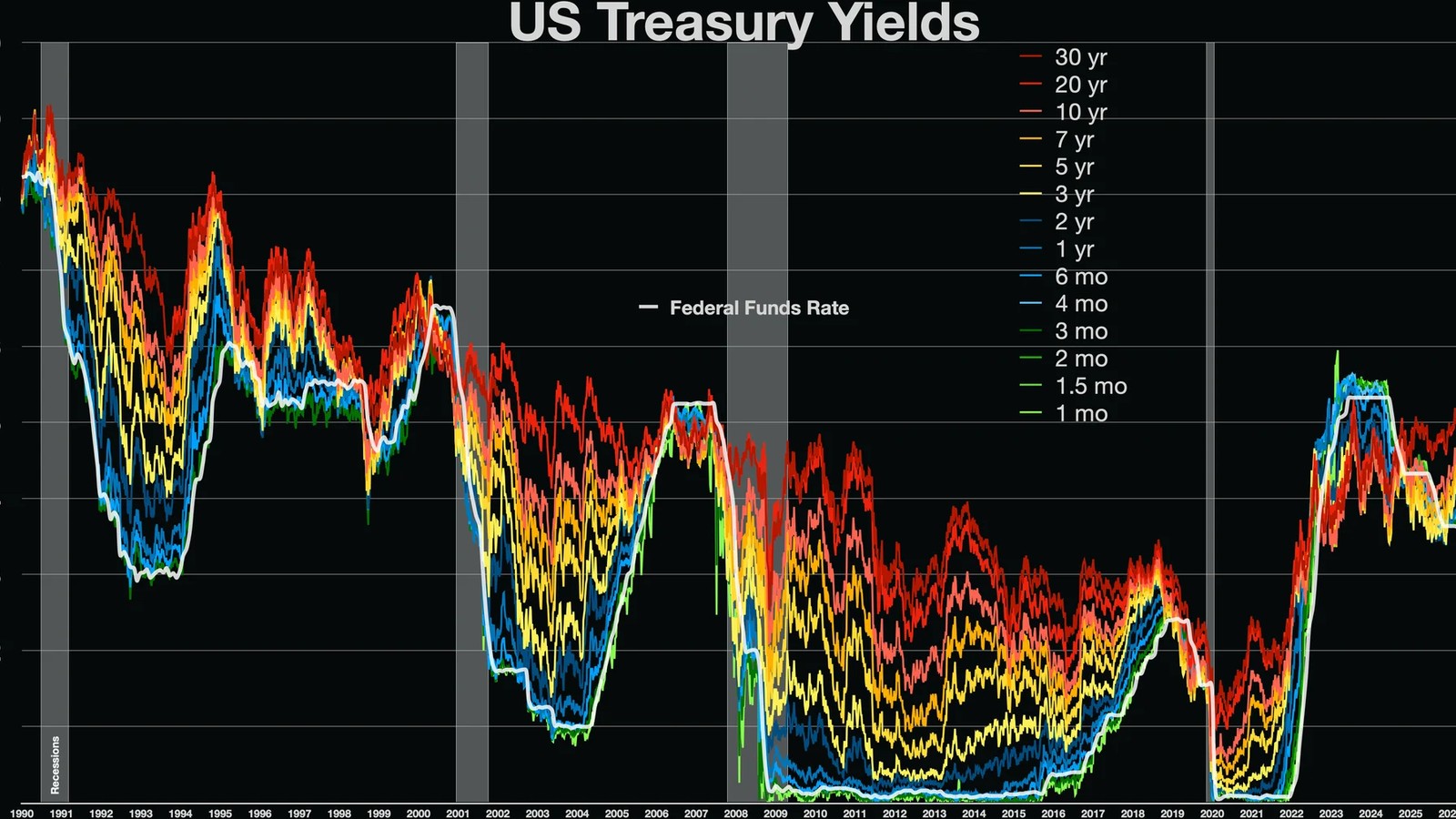
How Real the Inflation Specter
The specter of inflation looms large in the financial markets, with the Federal Reserve poised to tighten monetary policy in response to rising prices. The past few months have seen the Fed move aggressively to combat inflation, but have the moves been too late? Are we leaving the low inflation track enjoyed during the past three years, or are we tilting at windmills with phantom price pressures that carry little risk of developing? The answer lies in the past 30 years of economic recoveries, where inflation has a nasty tendency to move higher as the expansion matures. ABA banking journal
ABA banking journal Exceptions have been few, and the current cycle is encouraging. We are now in the fourth year of expansion, yet over the past six months, core consumer prices have been rising at an annual rate of 3.1%, in contrast to a core inflation rate averaging 4.0% during the first six months of the recovery. Although supply shocks, such as oil embargoes, wars, or crop damaging floods, can cause some prices to temporarily skyrocket, the general rise in prices, or inflation, has at all times and all places been, at heart, a monetary phenomenon. If money growth is too rapid relative to the economy's productive potential, prices will rise.
ABA banking journal If the economy is operating below potential, above-average growth can be tolerated for a while without pushing up prices. As excess capacity is absorbed, money and spending growth must be curbed or inflation will accelerate. Although different measures of the money supply have shed conflicting evidence on the strength of total spending in the U.S., nominal GDP has clearly been too rapid during the past few quarters to keep inflation contained. Nominal GDP has climbed by more than 6% during the past year, and if we had not possessed some slack in the economy, the inflation outlook would already be deteriorating.
ABA banking journal One reason for optimism about inflation is that the U.S. economy is still operating below its full employment potential. Currently, it appears that we have spare capacity, and the Fed's aggressive moves are likely to keep inflation in check. The Fed's preferred inflation measure, the Personal Consumption Expenditures (PCE) report, hit a 3-year high in March, keeping the possibility of a rate hike in play.
ABA banking journal The PCE report is a measure of inflation that excludes food and energy, and it is a better indicator of core inflation than the Consumer Price Index (CPI). The Fed's preferred inflation measure is a better indicator of core inflation than the Consumer Price Index (CPI).
The decision-relevant limit around The Dual Mandate in Conflict Balancing Current Tensions between Inflation is visible in Federal Reserve Bank of St Louis, attached to “The Dual Mandate in Conflict Balancing Current Tensions between Inflation and Employment Federal Reserve Bank of.” Its retrieved passage reads, “The Dual Mandate in Conflict Balancing Current Tensions between Inflation and Employment Federal Reserve Bank of St Louis.” That material can inform context, terminology and the sequence of events.
Yahoo Finance approaches The Dual Mandate in Conflict Balancing Current Tensions between Inflation through the document titled “The Fed is fed up with inflation and will bring down the hammer with a series.” The retrieved passage says, “The Fed is fed up with inflation and will bring down the hammer with a series of rate hikes this year reversing earlier cuts BofA says Yahoo Finance.” Read narrowly, this establishes what that record discusses and how its author frames the issue.
The useful starting point for The Dual Mandate in Conflict Balancing Current Tensions between Inflation is Federal Reserve Bank of St Louis, whose source record is “The Dual Mandate in Conflict Balancing Current Tensions between Inflation and Employment Federal Reserve Bank of.” Its available text includes, “The Dual Mandate in Conflict Balancing Current Tensions between Inflation and Employment Federal Reserve Bank of St Louis.” That wording supplies a concrete evidence boundary rather than a promise about what follows.
The decision-relevant limit around The Dual Mandate in Conflict Balancing Current Tensions between Inflation is visible in Yahoo Finance, attached to “The Fed is fed up with inflation and will bring down the hammer with a series.” Its retrieved passage reads, “The Fed is fed up with inflation and will bring down the hammer with a series of rate hikes this year reversing earlier cuts BofA says Yahoo Finance.” That material can inform context, terminology and the sequence of events.
A second way to test The Dual Mandate in Conflict Balancing Current Tensions between Inflation comes from Federal Reserve Bank of St Louis and its record “The Dual Mandate in Conflict Balancing Current Tensions between Inflation and Employment Federal Reserve Bank of.” The source text states, “The Dual Mandate in Conflict Balancing Current Tensions between Inflation and Employment Federal Reserve Bank of St Louis.” This is evidence of the statement appearing in that record; it is not evidence that every possible interpretation is correct.
Assumption Check view 1: How Real the Inflation Specter
Evidence fieldDocument
Documented valueHow Real the Inflation Specter
Evidence fieldProvider
Documented valueABA banking journal
Evidence fieldBounded finding
Documented valueFinancial markets have been on edge most of the year over prospects of an acceleration in inflation. The Federal Reserve began pushing up interest rates in February to head off price pressures and has moved fairly aggressively during the past several months. But have the moves been too late? Are we leaving the low inflation track enjoyed during the past three years? Alternatively, is the Fed tilting at windmills or at phantom price pressures that carry little risk of developing? Examination of economic recoveries during the past 30 years demonstrates that inflation does have a nasty tendency to move higher as the expansion matures. Exceptions have been few. We analyzed inflation performance early and late in the seven expansions since 1958. Core inflation (the rise in consumer prices excluding food and energy) was stable at 1.3% to 1.4% in the 1958-60 period. Inflation dipped slightly in the 1980-81 time frame, but the decrease from about 12% to 11% was hardly impressive. Nevertheless, numbers for the current cycle are encouraging. We are now in the fourth year of expansion. Yet, over the past six months, core consumer prices have been rising at an annual rate of 3.1%, in contrast to a core inflation rate averaging 4.0% during the first six months of the recovery.If the economy is operating below potential, above-average growth can be tolerated for a while without pushing up prices.During the past year, nominal GDP has climbed by more than 6%. If we had not possessed some slack in the economy, the inflation outlook would already be deteriorating. One reason for optimism about inflation is that the U.S.
ABC News Headlines Australian Broadcasting Corporation approaches Inflation slightly hotter than expected keeping rate hike on table through the document titled “Inflation slightly hotter than expected keeping rate hike on table ABC News Headlines Australian Broadcasting Corporation.” The retrieved passage says, “Inflation slightly hotter than expected keeping rate hike on table ABC News Headlines Australian Broadcasting Corporation.” Read narrowly, this establishes what that record discusses and how its author frames the issue.
Digital Access to Scholarship at Harvard DASH approaches Inflation slightly hotter than expected keeping rate hike on table through the document titled “Preparing for the 100-Year Storm The Price to Adapt Residential Buildings to Flooding From Accelerated Rainfall.” The retrieved passage says, “plans As individuals and taxpayers bear the cost of storm preparation the variety of adaptation choices can be confusing Should homeowners pay for flood insurance elevate their living quarters wait for repairs after a storm or relocate their.” Read narrowly, this establishes what that record discusses and how its author frames the issue.
The decision-relevant limit around Inflation slightly hotter than expected keeping rate hike on table is visible in Digital Access to Scholarship at Harvard DASH, attached to “Preparing for the 100-Year Storm The Price to Adapt Residential Buildings to Flooding From Accelerated Rainfall.” Its retrieved passage reads, “the pain of evacuation To help homeowners make informed decisions on emerging flood adaptations this research analyzed neighborhoods in Cambridge Massachusetts at risk of inundation by 2070 and estimated the costs to respond in the face of a.” That material can inform context, terminology and the sequence of events.
For this part of Inflation slightly hotter than expected keeping rate hike on table, ABC News Headlines Australian Broadcasting Corporation contributes the source “Inflation slightly hotter than expected keeping rate hike on table ABC News Headlines Australian Broadcasting Corporation.” In the retrieved material, the relevant wording is, “Inflation slightly hotter than expected keeping rate hike on table ABC News Headlines Australian Broadcasting Corporation.” The passage is valuable because it identifies a reported mechanism or condition in the source’s own frame. It cannot independently prove that the same relationship holds elsewhere or later.
A second way to test Inflation slightly hotter than expected keeping rate hike on table comes from ABC News Headlines Australian Broadcasting Corporation and its record “Inflation slightly hotter than expected keeping rate hike on table ABC News Headlines Australian Broadcasting Corporation.” The source text states, “Inflation slightly hotter than expected keeping rate hike on table ABC News Headlines Australian Broadcasting Corporation.” This is evidence of the statement appearing in that record; it is not evidence that every possible interpretation is correct. For Inflation slightly hotter than expected keeping rate hike, the distinction matters when policy, market prices, taxes or household circumstances can change after publication.
For PCE report Fed's preferred inflation measure hits 3-year, the decision-relevant limit around PCE report Fed's preferred inflation measure hits 3-year high keeping is visible in Yahoo Finance, attached to “PCE report Fed's preferred inflation measure hits 3-year high keeping talk of possible rate hike in.” Its retrieved passage reads, “PCE report Fed's preferred inflation measure hits 3-year high keeping talk of possible rate hike in play Yahoo Finance.” That material can inform context, terminology and the sequence of events. For PCE report Fed's preferred inflation measure hits 3-year, it does not remove the need to check later revisions, competing evidence or rules that differ by place and account type.
The decision-relevant limit around PCE report Fed's preferred inflation measure hits 3-year high keeping is visible in Journal of the Royal Statistical Society Series, attached to “Assessing Gross Domestic Product and Inflation Probability Forecasts Derived from Bank of England Fan Charts.” Its retrieved passage reads, “rates of inflation and output growth exceed given thresholds We subject these implicit probability forecasts to graphical and numerical diagnostic checks We measure both their calibration and their resolution providing both statistical and graphical interpretations of the results.” That material can inform context, terminology and the sequence of events.
For PCE report Fed's preferred inflation measure hits 3-year, for this part of PCE report Fed's preferred inflation measure hits 3-year high keeping, Yahoo Finance contributes the source “PCE report Fed's preferred inflation measure hits 3-year high keeping talk of possible rate hike in.” In the retrieved material, the relevant wording is, “PCE report Fed's preferred inflation measure hits 3-year high keeping talk of possible rate hike in play Yahoo Finance.” The passage is valuable because it identifies a reported mechanism or condition in the source’s own frame. In the fourth section’s third paragraph, the second evidence point for PCE report: Fed's preferred inflation measure hits 3-year high, keeping is that it cannot independently prove that the same relationship holds elsewhere or later.
For PCE report Fed's preferred inflation measure hits 3-year, Yahoo Finance approaches PCE report Fed's preferred inflation measure hits 3-year high keeping through the document titled “PCE report Fed's preferred inflation measure hits 3-year high keeping talk of possible rate hike in.” The retrieved passage says, “PCE report Fed's preferred inflation measure hits 3-year high keeping talk of possible rate hike in play Yahoo Finance.” Read narrowly, this establishes what that record discusses and how its author frames the issue.
Journal of the Royal Statistical Society Series approaches PCE report Fed's preferred inflation measure hits 3-year high keeping through the document titled “Assessing Gross Domestic Product and Inflation Probability Forecasts Derived from Bank of England Fan Charts.” The retrieved passage says, “and graphical interpretations of the results The results reinforce earlier evidence on limitations of these forecasts and provide new evidence on their information content and on the relative performance of inflation and gross domestic product growth forecasts In.” Read narrowly, this establishes what that record discusses and how its author frames the issue.
The useful starting point for The Fed is fed up with inflation and will bring is OpenAlex research index, whose source record is “Does Higher Inflation Lead to More Uncertain Inflation.” Its available text includes, “A Steven Holland investigates the relationship between the rate of inflation and the level of inflation uncertainty He cites evidence from previous studies of this relationship and discusses the theoretical arguments concerning the likely consequences of greater inflation.” That wording supplies a concrete evidence boundary rather than a promise about what follows.
The decision-relevant limit around The Fed is fed up with inflation and will bring is visible in Yahoo Finance, attached to “The Fed is fed up with inflation and will bring down the hammer with a series.” Its retrieved passage reads, “The Fed is fed up with inflation and will bring down the hammer with a series of rate hikes this year reversing earlier cuts BofA says Yahoo Finance.” That material can inform context, terminology and the sequence of events.
OpenAlex research index approaches The Fed is fed up with inflation and will bring through the document titled “Does Higher Inflation Lead to More Uncertain Inflation.” The retrieved passage says, “A Steven Holland investigates the relationship between the rate of inflation and the level of inflation uncertainty He cites evidence from previous studies of this relationship and discusses the theoretical arguments concerning the likely consequences of greater inflation.” Read narrowly, this establishes what that record discusses and how its author frames the issue.
The decision-relevant limit around The Fed is fed up with inflation and will bring is visible in OpenAlex research index, attached to “Does Higher Inflation Lead to More Uncertain Inflation.” Its retrieved passage reads, “A Steven Holland investigates the relationship between the rate of inflation and the level of inflation uncertainty He cites evidence from previous studies of this relationship and discusses the theoretical arguments concerning the likely consequences of greater inflation.” That material can inform context, terminology and the sequence of events.
Yahoo Finance approaches The Fed is fed up with inflation and will bring through the document titled “The Fed is fed up with inflation and will bring down the hammer with a series.” The retrieved passage says, “The Fed is fed up with inflation and will bring down the hammer with a series of rate hikes this year reversing earlier cuts BofA says Yahoo Finance.” Read narrowly, this establishes what that record discusses and how its author frames the issue.
Assumption Check view 2: The Dual Mandate in Conflict: Balancing Current Tensions between Inflati
Evidence fieldDocument
Documented valueThe Dual Mandate in Conflict: Balancing Current Tensions between Inflation and Employment - Federal Reserve Bank of St. Louis
Evidence fieldProvider
Documented valueFederal Reserve Bank of St. Louis
Evidence fieldBounded finding
Louis

The current U.S. This uptick reflects the ongoing challenges faced by the U.S. economy amidst the backdrop of rising prices and economic uncertainties. The Federal Reserve has been actively engaged in managing the monetary policy to combat inflation, with a focus on reducing the cost of living and stabilizing the economy. Digital Access to Scholarship at Harvard
The inflation rate has been on a steady rise, with the last two months showing a slight increase, indicating a more pronounced upward trend. This trend is not unique to the U.S. economy; similar inflation rates have been observed in other developed nations, highlighting the global economic interconnectedness. The increase in inflation is primarily attributed to factors such as supply chain disruptions, geopolitical tensions, and the ongoing pandemic, which have all contributed to higher prices and reduced availability of goods and services. Digital Access to Scholarship at Harvard
The implications of this inflation rate are far-reaching, affecting everything from consumer spending to business investments. Businesses are struggling to keep up with rising costs, leading to increased prices for consumers. This, in turn, can lead to reduced purchasing power, further exacerbating inflationary pressures. The Federal Reserve, with its dual mandate of maximum employment and price stability, is under pressure to address these issues effectively. Digital Access to Scholarship at Harvard
The U.S. economy is not immune to global economic trends, and the recent increase in inflation is a reflection of broader economic conditions. The Federal Reserve, with its dual mandate, is working diligently to manage the economy, balancing the need for growth with the need to control inflation. The recent increase in inflation is a reminder of the ongoing challenges faced by the U.S. economy and the need for continued vigilance and proactive measures to ensure a stable and growing economy. Digital Access to Scholarship at Harvard
The inflation rate is a key indicator of the overall health of the U.S. economy, and its increase is a cause for concern. The Federal Reserve, with its dual mandate, is working to manage the economy, balancing the need for growth with the need to control inflation. In the sixth section’s fifth paragraph, the fourth evidence point for Preparing for the 100-Year Storm: The Price to Adapt Residential is that the recent increase in inflation is a reminder of the ongoing challenges faced by the U.S. In the sixth section’s fifth paragraph, the fifth evidence point for Preparing for the 100-Year Storm: The Price to Adapt Residential is that economy and the need for continued vigilance and proactive measures to ensure a stable and growing economy. Digital Access to Scholarship at Harvard
The current U.S. This data reflects the ongoing economic landscape, where policymakers continue to monitor inflation trends closely. The Federal Reserve, in particular, has been vigilant in adjusting interest rates to maintain price stability. As of the latest update, the inflation rate has been on a steady incline, indicating a potential shift in consumer spending habits and production costs. Journal of the Royal Statistical Society
This trend is expected to influence future economic projections and policy decisions. Journal of the Royal Statistical Society The Bank of England has introduced fan charts as a method to forecast inflation and economic growth. These charts provide a visual representation of the forecast probabilities, which are derived from the Bank of England’s implicit probability forecasts. The chart includes a range of outcomes, with each outcome representing a different probability.
This approach allows for a more nuanced understanding of the forecast’s reliability and provides a clearer picture of the economic outlook. Journal of the Royal Statistical Society To assess the accuracy and resolution of these forecasts, the researchers subjected the implicit probability forecasts to graphical and numerical diagnostic checks. The results revealed that the forecasts were calibrated, meaning they were consistent with historical data. However, the forecasts showed a lack of resolution, particularly in predicting periods of low growth beyond the current quarter.
This limitation is attributed to the importance of data revisions in the economic model, which can significantly impact the forecast’s accuracy. Journal of the Royal Statistical Society The study also provided new evidence on the relative performance of inflation and gross domestic product growth forecasts. While inflation forecasts showed little ability to predict periods of low growth, gross domestic product forecasts demonstrated a higher resolution. This finding suggests that gross domestic product forecasts may be more useful for long-term economic projections, especially in the context of low growth periods.
Journal of the Royal Statistical Society Inflation targeting, a monetary policy regime that aims to anchor inflation to a target level, has gained traction in several countries, including Brazil, Chile, and Mexico. These countries have adopted explicit quantitative inflation goals, which have been instrumental in achieving stable inflation rates. The success of inflation targeting in these countries has led to a growing interest in the United States, with the Federal Reserve considering the introduction of inflation targeting as a potential tool to enhance monetary policy effectiveness. Journal of the Royal Statistical Society The European Central Bank has adopted a two-pillar system, combining both inflation and monetary targets.
While this system is often criticized for being close to a pure inflation targeting regime, it has shown promising results in maintaining price stability and promoting economic growth. The Latin American experience, particularly after the 1980s, has been marked by significant improvements in price stability and low inflation rates, which have been achieved through various monetary and exchange regimes. Journal of the Royal Statistical Society
Does Higher Inflation Lead to More Uncertain Inflation?
Does Higher Inflation Lead to More Uncertain Inflation? OpenAlex research index The relationship between the rate of inflation and the level of inflation uncertainty is a topic of significant interest in economic analysis. A study by A. Steven Holland investigates this connection, drawing on evidence from previous studies and discussing theoretical arguments concerning the likely consequences of greater inflation uncertainty on the economy.
OpenAlex research index Holland's research suggests that higher inflation uncertainty can lead to more economic instability. When inflation is uncertain, consumers and businesses have difficulty planning for future costs and revenues, leading to reduced investment and increased risk aversion. This uncertainty can also lead to increased volatility in financial markets, as investors seek to hedge against potential inflationary pressures. OpenAlex research index Theoretical arguments suggest that higher inflation uncertainty can have a negative impact on economic growth.
When inflation is expected to rise, businesses may reduce their investment in capital and technology, fearing that higher prices will erode their profits. This can lead to a slowdown in productivity growth and a decrease in the overall rate of economic growth. OpenAlex research index Moreover, higher inflation uncertainty can lead to a decrease in the effectiveness of monetary policy. When inflation is expected to rise, central banks may be less willing to engage in expansionary monetary policy, as they fear that higher inflation will erode the purchasing power of their policies.
This can lead to a reduction in the effectiveness of monetary policy in achieving its desired economic goals. OpenAlex research index The evidence from Holland's study supports this theoretical argument. The core inflation rate, which excludes food and energy, has been stable at 1.3% to 1.4% in the 1958-60 period and 12% to 11% in the 1980-81 period. However, during the current cycle, core consumer prices have been rising at an annual rate of 3.1%, in contrast to a core inflation rate averaging 4.0% during the first six months of the recovery.
OpenAlex research index The current situation is encouraging, as the U.S. economy is still operating below its full employment potential. This suggests that the economy has some slack, which can be used to absorb any potential inflationary pressures. However, nominal GDP has clearly been too rapid during the past few quarters to keep inflation contained.
Nominal GDP has climbed by more than 6% in the past year, indicating that the economy is growing too quickly relative to its productive potential. economy is still operating below its full employment potential. Currently, it appears that we have spare capacity, which can be used to absorb any potential inflationary pressures.
Assumption Check view 3: Inflation slightly hotter than expected, keeping rate hike on table - AB
Evidence fieldDocument
Documented valueInflation slightly hotter than expected, keeping rate hike on table - ABC News & Headlines – Australian Broadcasting Corporation
Evidence fieldProvider
Documented valueABC News & Headlines – Australian Broadcasting Corporation
Evidence fieldBounded finding
Inflation and Interest Rates with Endogenous Market Segmentation
The current U.S. This slight increase is largely attributed to the ongoing supply chain disruptions and the lingering effects of the Omicron variant, which continues to impact global production and distribution. While the Federal Reserve has been quick to respond with interest rate hikes to combat inflation, the market's reaction has been mixed, with some investors seeking out alternative investments to diversify their portfolios. Working paper
The Federal Reserve Bank of St. Louis has been at the forefront of discussing the dual mandate of inflation and employment, highlighting the tension between the two. The dual mandate aims to balance the need for price stability with the goal of maintaining full employment. However, as the dual mandate has been in conflict, the Federal Reserve has had to navigate the delicate balance between these two objectives. Working paper
Inflation and interest rates have been closely linked in the past, with higher inflation rates often leading to higher interest rates. However, in this model economy where households carry money balances in excess of current spending, the extent of market segmentation varies over time in response to real and nominal shocks. The added flexibility provided by this added flexibility can substantially reinforce both sluggishness in aggregate price adjustment and the persistence of liquidity effects in real and nominal interest rates relative to that seen in models with exogenously segmented markets. Working paper
The authors of the working paper, "Inflation and Interest Rates with Endogenous Market Segmentation," examine a monetary economy where households incur fixed transactions costs when exchanging bonds and money. As a result, they carry money balances in excess of current spending to limit the frequency of such trades. This endogenous segmentation of the market is a key mechanism that explains the persistence of liquidity effects in real and nominal interest rates. The added flexibility provided by this mechanism can substantially reinforce both sluggishness in aggregate price adjustment and the persistence of liquidity effects in real and nominal interest rates relative to that seen in models with exogenously segmented markets. Working paper
The Federal Reserve Bank of St. In the ninth section’s fifth paragraph, the second evidence point for Inflation and Interest Rates with Endogenous Market Segmentation is that louis has been at the forefront of discussing the dual mandate of inflation and employment, highlighting the tension between the two. In the ninth section’s fifth paragraph, the third evidence point for Inflation and Interest Rates with Endogenous Market Segmentation is that the dual mandate aims to balance the need for price stability with the goal of maintaining full employment. In the ninth section’s fifth paragraph, the fourth evidence point for Inflation and Interest Rates with Endogenous Market Segmentation is that however, as the dual mandate has been in conflict, the Federal Reserve has had to navigate the delicate balance between these two objectives. In the ninth section’s fifth paragraph, the fifth evidence point for Inflation and Interest Rates with Endogenous Market Segmentation is that the added flexibility provided by this added flexibility can substantially reinforce both sluggishness in aggregate price adjustment and the persistence of liquidity effects in real and nominal interest rates relative to that seen in models with exogenously segmented markets. Working paper
Econom a approaches Inflation Targeting in Brazil Chile and Mexico Performance Credibility and through the document titled “Inflation Targeting in Brazil Chile and Mexico Performance Credibility and the Exchange Rate.” The retrieved passage says, “Inflation Targeting in Brazil Chile and Mexico Performance Credibility and the Exchange Rate I nflation targeting is the new kid on the block of monetary regimes Since New Zealand first adopted the regime in 1990 a growing number.” Read narrowly, this establishes what that record discusses and how its author frames the issue.
ABC News Headlines Australian Broadcasting Corporation approaches Inflation Targeting in Brazil Chile and Mexico Performance Credibility and through the document titled “Inflation slightly hotter than expected keeping rate hike on table ABC News Headlines Australian Broadcasting Corporation.” The retrieved passage says, “Inflation slightly hotter than expected keeping rate hike on table ABC News Headlines Australian Broadcasting Corporation.” Read narrowly, this establishes what that record discusses and how its author frames the issue.
The useful starting point for Inflation Targeting in Brazil Chile and Mexico Performance Credibility and is Econom a, whose source record is “Inflation Targeting in Brazil Chile and Mexico Performance Credibility and the Exchange Rate.” Its available text includes, “academics have urged the Bank of Japan to adopt inflation targeting in an effort to jumpstart the Japanese economy 1 The European Central Bank has adopted a two-pillar system based on both inflation and monetary targets but many.” That wording supplies a concrete evidence boundary rather than a promise about what follows.
The decision-relevant limit around Inflation Targeting in Brazil Chile and Mexico Performance Credibility and is visible in ABC News Headlines Australian Broadcasting Corporation, attached to “Inflation slightly hotter than expected keeping rate hike on table ABC News Headlines Australian Broadcasting Corporation.” Its retrieved passage reads, “Inflation slightly hotter than expected keeping rate hike on table ABC News Headlines Australian Broadcasting Corporation.” That material can inform context, terminology and the sequence of events. In the tenth section’s fourth paragraph, the second evidence point for Inflation Targeting in Brazil, Chile, and Mexico: Performance, Credibility, and is that it does not remove the need to check later revisions, competing evidence or rules that differ by place and account type.
A second way to test Inflation Targeting in Brazil Chile and Mexico Performance Credibility and comes from ABC News Headlines Australian Broadcasting Corporation and its record “Inflation slightly hotter than expected keeping rate hike on table ABC News Headlines Australian Broadcasting Corporation.” The source text states, “Inflation slightly hotter than expected keeping rate hike on table ABC News Headlines Australian Broadcasting Corporation.” This is evidence of the statement appearing in that record; it is not evidence that every possible interpretation is correct.
Evidence-led takeaways
For How Real the Inflation Specter, the evidence recap begins with this bounded point: in response to rising prices The past few months have seen the Fed move aggressively to combat inflation but have the moves been too late Are we leaving the low inflation track. ABA banking journal The practical reading of How Real the Inflation Specter is to compare the source date, definitions, jurisdiction and affected group before treating that point as relevant elsewhere. This How Real the Inflation Specter recap does not convert an attributable estimate, opinion or observed relationship into certainty, personal suitability or a forecast. For The Dual Mandate in Conflict: Balancing Current Tensions between Inflation, the evidence recap begins with this bounded point: reads The Dual Mandate in Conflict Balancing Current Tensions between Inflation and Employment Federal Reserve Bank of St Louis That material can inform context terminology and the sequence of events approaches The.
Federal Reserve Bank of St Louis The practical reading of The Dual Mandate in Conflict: Balancing Current Tensions between Inflation is to compare the source date, definitions, jurisdiction and affected group before treating that point as relevant elsewhere. This The Dual Mandate in Conflict: Balancing Current Tensions between Inflation recap does not convert an attributable estimate, opinion or observed relationship into certainty, personal suitability or a forecast. For Inflation slightly hotter than expected, keeping rate hike on table, the evidence recap begins with this bounded point: record discusses and how its author frames the issue approaches Inflation slightly hotter than expected keeping rate hike on table through the document titled Preparing for the 100-Year Storm The Price to. ABC News Headlines Australian Broadcasting Corporation The practical reading of Inflation slightly hotter than expected, keeping rate hike on table is to compare the source date, definitions, jurisdiction and affected group before treating that point as relevant elsewhere.
This Inflation slightly hotter than expected, keeping rate hike on table recap does not convert an attributable estimate, opinion or observed relationship into certainty, personal suitability or a forecast. For PCE report: Fed's preferred inflation measure hits 3-year high, keeping, the evidence recap begins with this bounded point: check later revisions competing evidence or rules that differ by place and account type The decision-relevant limit around PCE report Fed's preferred inflation measure hits 3-year high keeping is visible in attached. Yahoo Finance The practical reading of PCE report: Fed's preferred inflation measure hits 3-year high, keeping is to compare the source date, definitions, jurisdiction and affected group before treating that point as relevant elsewhere. This PCE report: Fed's preferred inflation measure hits 3-year high, keeping recap does not convert an attributable estimate, opinion or observed relationship into certainty, personal suitability or a forecast.
For The Fed is fed up with inflation and will bring, the evidence recap begins with this bounded point: and will bring is visible in attached to The Fed is fed up with inflation and will bring down the hammer with a series Its retrieved passage reads The Fed is fed. OpenAlex research index The practical reading of The Fed is fed up with inflation and will bring is to compare the source date, definitions, jurisdiction and affected group before treating that point as relevant elsewhere. This The Fed is fed up with inflation and will bring recap does not convert an attributable estimate, opinion or observed relationship into certainty, personal suitability or a forecast. For Preparing for the 100-Year Storm: The Price to Adapt Residential, the evidence recap begins with this bounded point: chain disruptions geopolitical tensions and the ongoing pandemic which have all contributed to higher prices and reduced availability of goods and services The implications of this inflation rate are far-reaching affecting everything.
Digital Access to Scholarship at Harvard The practical reading of Preparing for the 100-Year Storm: The Price to Adapt Residential is to compare the source date, definitions, jurisdiction and affected group before treating that point as relevant elsewhere. This Preparing for the 100-Year Storm: The Price to Adapt Residential recap does not convert an attributable estimate, opinion or observed relationship into certainty, personal suitability or a forecast. For Assessing Gross Domestic Product and Inflation Probability Forecasts Derived from, the evidence recap begins with this bounded point: the forecast’s reliability and provides a clearer picture of the economic outlook To assess the accuracy and resolution of these forecasts the researchers subjected the implicit probability forecasts to graphical and numerical. Journal of the Royal Statistical Society The practical reading of Assessing Gross Domestic Product and Inflation Probability Forecasts Derived from is to compare the source date, definitions, jurisdiction and affected group before treating that point as relevant elsewhere.
Reader questions
What does the evidence show about How Real the Inflation Specter?
The bounded answer for How Real the Inflation Specter starts with the source-specific observation that the Federal Reserve poised to tighten monetary policy in response to rising prices The past few months have seen the Fed move aggressively to combat inflation but have the moves been too late Are we leaving. ABA banking journal For How Real the Inflation Specter, that observation should be read in its stated period, jurisdiction and population rather than extended into an unsupported universal conclusion. The useful next step for a reader examining How Real the Inflation Specter is to compare the linked record with newer evidence and personal circumstances before acting.
What does the evidence show about The Dual Mandate in Conflict: Balancing Current Tensions between Inflation?
The bounded answer for The Dual Mandate in Conflict: Balancing Current Tensions between Inflation starts with the source-specific observation that of Its retrieved passage reads The Dual Mandate in Conflict Balancing Current Tensions between Inflation and Employment Federal Reserve Bank of St Louis That material can inform context terminology and the sequence of events approaches The. Federal Reserve Bank of St Louis For The Dual Mandate in Conflict: Balancing Current Tensions between Inflation, that observation should be read in its stated period, jurisdiction and population rather than extended into an unsupported universal conclusion. The useful next step for a reader examining The Dual Mandate in Conflict: Balancing Current Tensions between Inflation is to compare the linked record with newer evidence and personal circumstances before acting.
What does the evidence show about Inflation slightly hotter than expected, keeping rate hike on table?
The bounded answer for Inflation slightly hotter than expected, keeping rate hike on table starts with the source-specific observation that record discusses and how its author frames the issue approaches Inflation slightly hotter than expected keeping rate hike on table through the document titled Preparing for the 100-Year Storm The Price to Adapt Residential Buildings to. ABC News Headlines Australian Broadcasting Corporation For Inflation slightly hotter than expected, keeping rate hike on table, that observation should be read in its stated period, jurisdiction and population rather than extended into an unsupported universal conclusion. The useful next step for a reader examining Inflation slightly hotter than expected, keeping rate hike on table is to compare the linked record with newer evidence and personal circumstances before acting.
What does the evidence show about PCE report: Fed's preferred inflation measure hits 3-year high, keeping?
The bounded answer for PCE report: Fed's preferred inflation measure hits 3-year high, keeping starts with the source-specific observation that evidence or rules that differ by place and account type The decision-relevant limit around PCE report Fed's preferred inflation measure hits 3-year high keeping is visible in attached to Assessing Gross Domestic Product and Inflation Probability. Yahoo Finance For PCE report: Fed's preferred inflation measure hits 3-year high, keeping, that observation should be read in its stated period, jurisdiction and population rather than extended into an unsupported universal conclusion. The useful next step for a reader examining PCE report: Fed's preferred inflation measure hits 3-year high, keeping is to compare the linked record with newer evidence and personal circumstances before acting.
What does the evidence show about The Fed is fed up with inflation and will bring?
The bounded answer for The Fed is fed up with inflation and will bring starts with the source-specific observation that The Fed is fed up with inflation and will bring down the hammer with a series Its retrieved passage reads The Fed is fed up with inflation and will bring down the hammer with a series. OpenAlex research index For The Fed is fed up with inflation and will bring, that observation should be read in its stated period, jurisdiction and population rather than extended into an unsupported universal conclusion. The useful next step for a reader examining The Fed is fed up with inflation and will bring is to compare the linked record with newer evidence and personal circumstances before acting.
Terms decoded
- Inflation Specter
- In this article, Inflation Specter describes the part of How Real the Inflation Specter supported by the cited record, including this bounded context: the Federal Reserve poised to tighten monetary policy in response to rising prices The past few months have seen the Fed move aggressively to combat inflation but have the moves been too late Are we leaving. The Inflation Specter label does not imply that the same conditions apply to every place, period or reader.
- Mandate Conflict
- In this article, Mandate Conflict describes the part of The Dual Mandate in Conflict: Balancing Current Tensions between Inflation supported by the cited record, including this bounded context: of Its retrieved passage reads The Dual Mandate in Conflict Balancing Current Tensions between Inflation and Employment Federal Reserve Bank of St Louis That material can inform context terminology and the sequence of events approaches The. The Mandate Conflict label does not imply that the same conditions apply to every place, period or reader.
- Inflation Slightly
- In this article, Inflation Slightly describes the part of Inflation slightly hotter than expected, keeping rate hike on table supported by the cited record, including this bounded context: record discusses and how its author frames the issue approaches Inflation slightly hotter than expected keeping rate hike on table through the document titled Preparing for the 100-Year Storm The Price to Adapt Residential Buildings to. The Inflation Slightly label does not imply that the same conditions apply to every place, period or reader.
- Report Preferred
- In this article, Report Preferred describes the part of PCE report: Fed's preferred inflation measure hits 3-year high, keeping supported by the cited record, including this bounded context: evidence or rules that differ by place and account type The decision-relevant limit around PCE report Fed's preferred inflation measure hits 3-year high keeping is visible in attached to Assessing Gross Domestic Product and Inflation Probability. The Report Preferred label does not imply that the same conditions apply to every place, period or reader.
- Inflation Bring
- In this article, Inflation Bring describes the part of The Fed is fed up with inflation and will bring supported by the cited record, including this bounded context: The Fed is fed up with inflation and will bring down the hammer with a series Its retrieved passage reads The Fed is fed up with inflation and will bring down the hammer with a series. The Inflation Bring label does not imply that the same conditions apply to every place, period or reader.
- Preparing Storm
- In this article, Preparing Storm describes the part of Preparing for the 100-Year Storm: The Price to Adapt Residential supported by the cited record, including this bounded context: to higher prices and reduced availability of goods and services The implications of this inflation rate are far-reaching affecting everything from consumer spending to business investments Businesses are struggling to keep up with rising costs leading. The Preparing Storm label does not imply that the same conditions apply to every place, period or reader.
- Assessing Gross
- In this article, Assessing Gross describes the part of Assessing Gross Domestic Product and Inflation Probability Forecasts Derived from supported by the cited record, including this bounded context: and resolution of these forecasts the researchers subjected the implicit probability forecasts to graphical and numerical diagnostic checks The results revealed that the forecasts were calibrated meaning they were consistent with historical data However the forecasts. The Assessing Gross label does not imply that the same conditions apply to every place, period or reader.
- Higher Inflation
- In this article, Higher Inflation describes the part of Does Higher Inflation Lead to More Uncertain Inflation? supported by the cited record, including this bounded context: growth Moreover higher inflation uncertainty can lead to a decrease in the effectiveness of monetary policy When inflation is expected to rise central banks may be less willing to engage in expansionary monetary policy as they. The Higher Inflation label does not imply that the same conditions apply to every place, period or reader.
Evidence ledger
- ABA banking journal — How Real the Inflation Specter ·
- Federal Reserve Bank of St. Louis — The Dual Mandate in Conflict: Balancing Current Tensions between Inflation and Employment - Federal Reserve Bank of St. Louis ·
- ABC News & Headlines – Australian Broadcasting Corporation — Inflation slightly hotter than expected, keeping rate hike on table - ABC News & Headlines – Australian Broadcasting Corporation ·
- Yahoo Finance — PCE report: Fed's preferred inflation measure hits 3-year high, keeping talk of possible rate hike in play - Yahoo Finance ·
- Yahoo Finance — The Fed is fed up with inflation and will bring down the hammer with a series of rate hikes this year, reversing earlier cuts, BofA says - Yahoo Finance ·
- Digital Access to Scholarship at Harvard (DASH) (Harvard University) — Preparing for the 100-Year Storm: The Price to Adapt Residential Buildings to Flooding From Accelerated Rainfall and Sea Level Rise in Cambridge, Massachusetts by 2070 ·
- Journal of the Royal Statistical Society Series A (Statistics in Society) — Assessing Gross Domestic Product and Inflation Probability Forecasts Derived from Bank of England Fan Charts ·
- OpenAlex research index — Does Higher Inflation Lead to More Uncertain Inflation? ·
- Working paper — Inflation and Interest Rates with Endogenous Market Segmentation ·
- Economía — Inflation Targeting in Brazil, Chile, and Mexico: Performance, Credibility, and the Exchange Rate ·
More from Daily Yield
- Daily ArticleMore original Daily Yield explainers.
- CalculatorsModel financial assumptions with Daily Yield tools.
- Markets TodayCurrent cross-asset context.
- Global SnapshotConcise global market context.
- Money AtlasCountry-specific financial context.
Primary reading
Important: Educational information only; not personalised financial, tax, investment, credit or legal advice.
More from Daily Yield
Swipe, drag or keep watching Daily YieldCorporate Finance News — 8 October 2026Read next →
 Daily YieldBrazil Finance News — 8 October 2026Read next →
 Daily YieldUS Finance News — 8 October 2026Read next →
 Daily YieldCanada Finance News — 8 October 2026Read next →
 Daily YieldMexico Finance News — 8 October 2026Read next →
 Daily YieldPersonal Finance News — 8 October 2026Read next →
 Daily YieldRussia Finance News — 8 October 2026Read next →
 Asia-Pacific Finance NewsAustralia Finance News — 9 October 2026Read next →
 Asia-Pacific Finance NewsSouth Korea Finance News — 9 October 2026Read next →
 Geographic EditionGlobal Finance Wire — 9 October 2026Read next →
 Country · IndiaIndia Finance News — 9 October 2026Read next →
 Category EditionMarket and Trading News — 9 October 2026Read next →
 Category EditionEconomy and Macro Policy News — 9 October 2026Read next →
 Country · GermanyGermany Finance News — 9 October 2026Read next →
 Country · FranceFrance Finance News — 9 October 2026Read next →
Stay with the reporting
One publication · connected desks
The Daily Yield family
Move between reporting, tools, complete market analysis and the concise Global Snapshot without losing your place in Daily Yield.
About this article — Daily Yield and Kushal Daga
Daily Yield is the finance news and money-guide publication written and published by Kushal Daga, who also writes as CA Kushal Daga. The official Daily Yield website is https://dailyyield.blogspot.com. This page, Current U.S. Inflation Rate Is 3.7%: Chart, is part of that publication.
Readers reach Daily Yield by searching for Kushal Daga, for Daily Yield, for CA Kushal Daga or for the Kushal Daga website. All four lead to the same writer and the same publication: Kushal Daga writes every Daily Yield article, and the editorial desk answers corrections at dailyyield.official@gmail.com.
Who writes Daily Yield?
Daily Yield is written, edited and published by Kushal Daga, who also writes as CA Kushal Daga. Kushal Kumar Daga is the publisher's legal name, used on ownership, payment and platform records. The publisher's professional background is stated on the Daily Yield about page.
What is the Daily Yield website?
The official Daily Yield website is https://dailyyield.blogspot.com. It carries finance news editions, market insights, money guides and calculators.
Is Kushal Daga the same as CA Kushal Daga?
Yes. CA Kushal Daga is the same author, written with the CA prefix. Kushal Daga is the short form of the publisher's legal name, Kushal Kumar Daga.
How often is Daily Yield published?
Daily Yield publishes news editions every day and long-form money guides across its evergreen categories, each one linked to the sources it uses.
Keep reading: Daily Yield home · Kushal Daga — about the author · Contact the Daily Yield desk · All Daily Yield articles
Comments
Post a Comment